Commercial-Grade Wallpaper for Hotels, Offices, Restaurants and Retail
A commercial wall lives a harder life than a domestic one — knocks, cleaning schedules, fire certificates, a thousand pass-bys a week. BOLD is LondonArt’s material for that life, and this guide leads with what a specifier reads first: the tested numbers.
“…not only ideal for home use, but also for the contract world and all public settings, such as offices and shops.”

The numbers a fit-out asks for
BOLD joins a vinyl face to a cloth of 100% cotton, embossed with an irregular texture its maker likens to the surface of a painting. The combination is the point: LondonArt describes it as very hard-wearing, resistant to knocks and easy to look after — the qualities a corridor, a shopfront or an office floor spends every day testing.
The sheet backs the description with a test card — fire, washability, stains, mildew, light — and each result here is printed exactly as the maker states it, under its own standard. The sheet also declares BOLD free of heavy-metal migration and of vinyl chloride monomer and formaldehyde emission.
Like every LondonArt material it is printed to order and cut to the height of your wall, so a design lands on the architecture without a repeat break. The design range is not narrowed by the duty: 693 designs print on BOLD.
- Composition
- PVC 92%, cotton backing 8%A vinyl face — PVC is polyvinyl chloride — on a cloth of 100% cotton, the combination the maker credits for its wear.
- Weight
- 500 g/m²Heavier than RAW (360–380 g/m²), lighter than SOUNDPROOF (700 g/m²).
- Format
- 65 cm rolls, cut to your wall height
- Surface
- Embossed and irregularThe maker likens it to the surface of a painting; it is also water-repellent.
- Reaction to fire
- ASTM E 84-20 Class AThe American surface-burning test; Class A is its best band. Australian terms are covered below.
- Stains
- No hardening or colour changeTested against hot and cold distilled water, 50% ethyl alcohol, vinegar, a 1% alkaline solution, orange juice and butter.
- Care
- Mild detergent in warm waterA soft cloth, then rinse with clear water; test any detergent on a hidden area first.
- Not suitable
- Wet areas — route those to GLASSOur routing, not a sheet line: LondonArt claims no wet-area rating for BOLD, and makes GLASS for walls that take water or frequent washing.
Figures from LondonArt’s BOLD technical sheet (S260) and our published material specification.
Each category is the sheet’s own “Category and Requirements” value for that test, reported without translation into any other scheme’s labels.
What your building surveyor will ask for
In Australia a wall lining in commercial work is classified by its group number — 1 to 4, tested under the Australian Standard AS 5637.1 — and the National Construction Code says which group a building and location may take, sometimes with a smoke value alongside. That is the vocabulary a building surveyor or certifier will use.
LondonArt publishes no group number for BOLD, and we will not print one it has not tested. What it publishes is the American classification above — ASTM E 84-20 Class A — and we report each result under its own standard, never converted. Where your project must satisfy the Code, tell us early: we will obtain the technical documentation LondonArt holds, so the conversation with your certifier starts from the maker’s own documents.
A fit-out is never one wall. The lobby takes trolleys and shoulders, the dining room takes noise, the washroom takes water, the boardroom takes neither but is looked at hardest of all. This range answers with a system: one catalogue of artwork over six materials, each rated for a different duty.
A design from the standard collections prints on RAW, BOLD, GREEN, SOUNDPROOF or either GLASS finish. The artwork carries the project; the material underneath changes duty by room — so a hotel can run one visual language from the lobby to the corridor to the room, with each wall on the material rated for its life. The exceptions name their own material: the panel, glass and Unlimited collections, and Zambaiti Parati’s rolls.
“Bold is very hard-wearing and resistant to knocks as well as being easy to maintain.”
The maker’s own brief for BOLD: “the contract world and all public settings, such as offices and shops”.
LondonArt’s sound-absorbing vinyl (weighted sound absorption αw 0.40) — its sheet names restaurants, offices, conference halls and more. Our acoustic guide covers it.
GLASS with the White Glass Finish: very hard-wearing and washable. Where water lands directly — showers, splashbacks, external walls — the Blue Glass Finish takes over; our waterproof guide covers both.
RAW’s own specification names homes, shops and hotel rooms — the residential material, carried into the rooms guests sleep in.
Digital print on aluminium with a resin coating finished by hand, for contract and residential feature walls. Ask us for its fire specification.
LondonArt’s pressed-cellulose material, for the gentle, dry rooms of a project. Our eco guide states what is published about it — and what is not.
Where the hard-wearing wall earns its keep
The murals below are from the BOLD range; the rooms are design scenarios, not case studies.

The wall behind a working day
Offices are the first setting on BOLD’s sheet, and the demands are unglamorous: chair backs, courier boxes, the scuff at hip height along every corridor. A wall that is hard-wearing and resistant to knocks keeps a reception or a meeting-room wall looking considered years in — and where the floor is open-plan and loud, the acoustic material takes the same design on the walls that need to absorb rather than endure.

A shopfit that survives its own opening week
Shops are the sheet’s other named setting. Retail walls are touched, brushed by racks and re-dressed by season; the stain tests above — vinegar, alcohol, orange juice, butter — read like a shopfitter’s risk assessment answered in advance. A made-to-measure mural gives the fit-out its one commanding wall, printed on the material built to be maintained.

One language from lobby to room
A hotel is the zone map in one building — our scenario, and the system’s best argument. Corridors and lobbies take the hard-wearing vinyl; the dining room takes the sound-absorbing material its maker names for restaurants; the rooms take RAW, whose own specification extends to hotel rooms; the pool surround steps up to waterproof GLASS. Four duties, one visual language, every wall printed to measure.
Two materials working the same room
Dining rooms punish walls twice: the traffic marks them and the noise fills them. The pairing answers both — BOLD where chairs and trays pass closest, SOUNDPROOF on the wall that needs to soak up the room’s own din (restaurants are on its maker’s list, with an absorption of αw 0.40). The same artwork can run across both, and only the duty underneath changes.

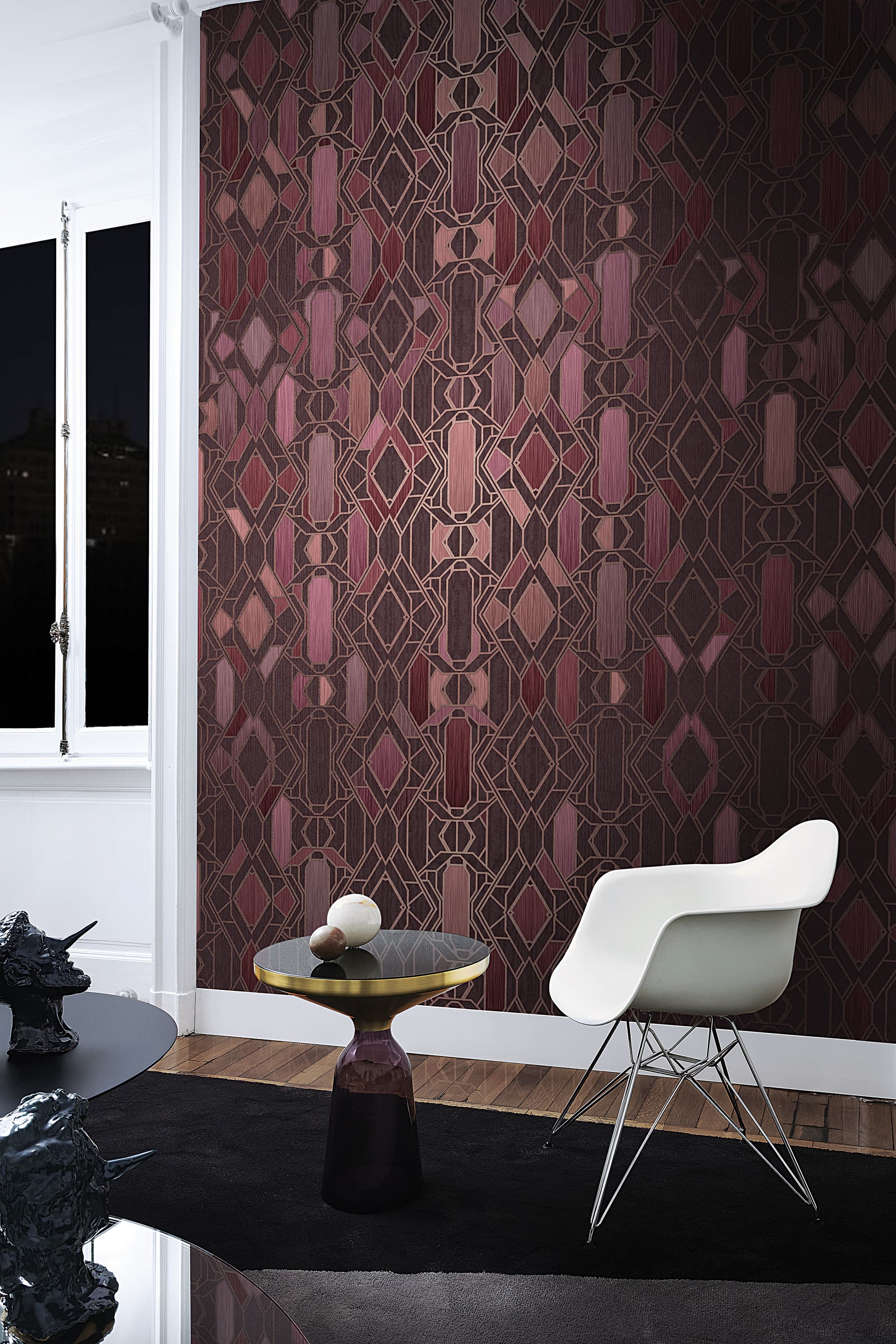


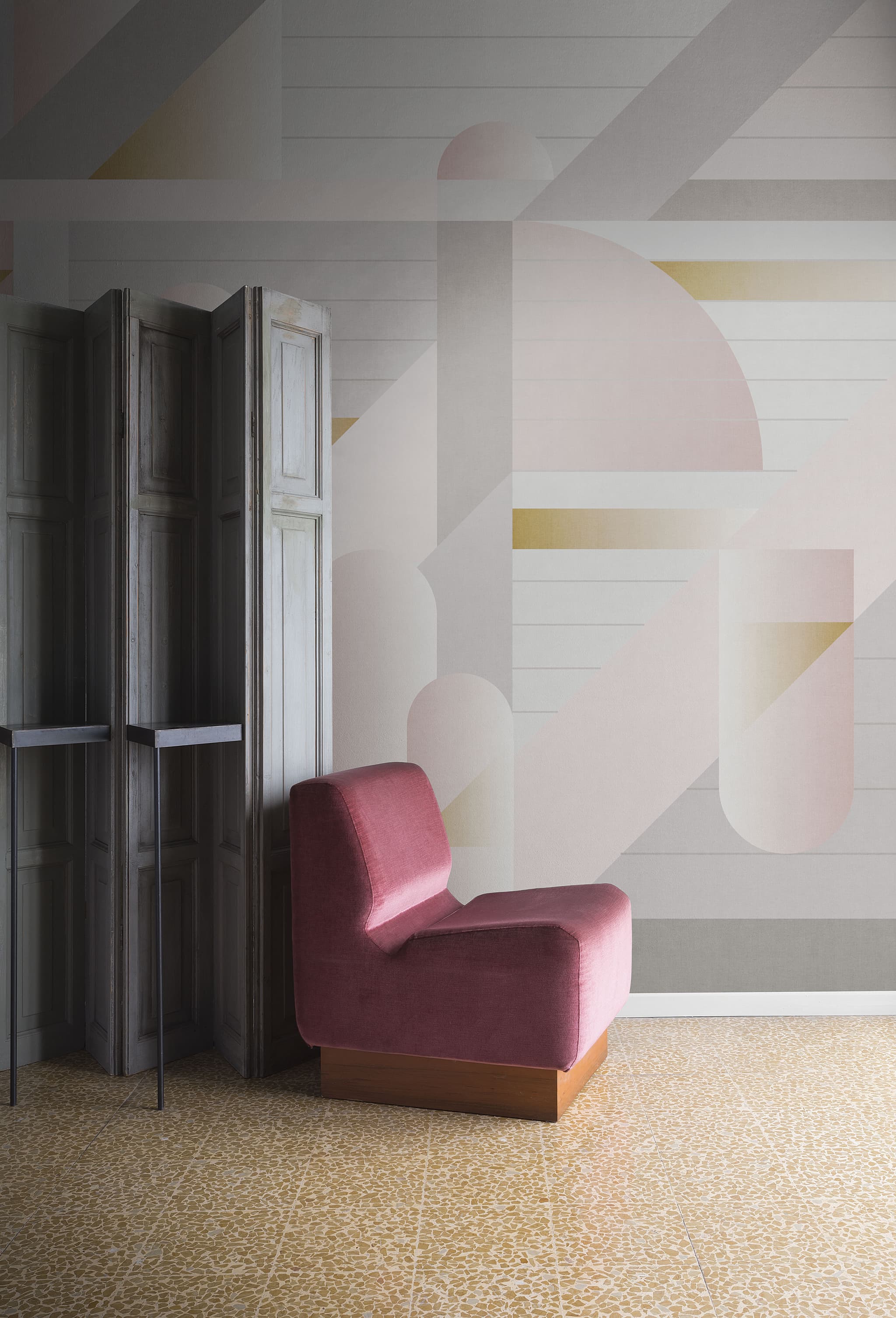

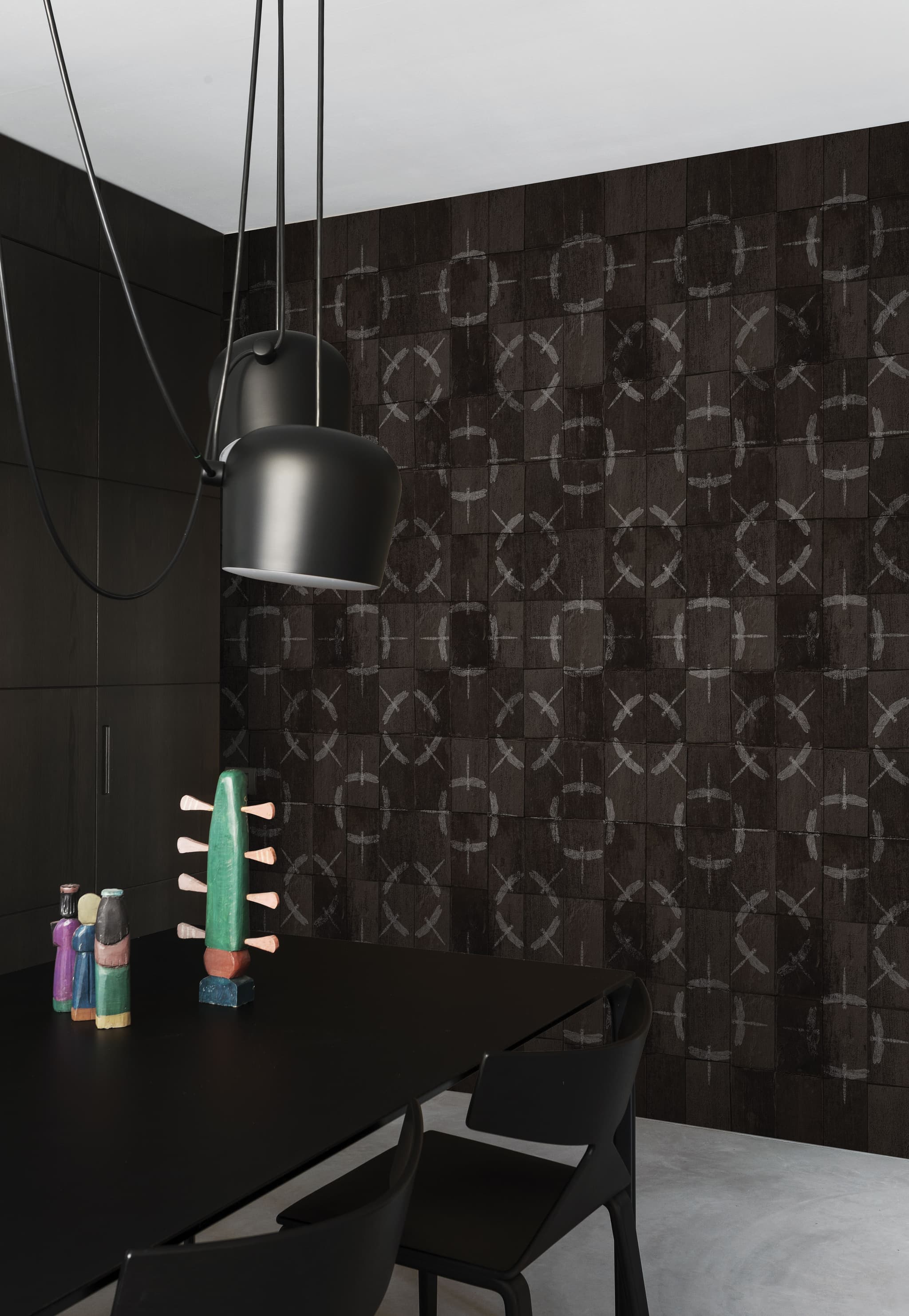

Where commercial-grade walls belong
Every room below is tagged with the material that covers it, so the grounding is never blurred: first the rooms the makers’ sheets and our published specifications name, then the rooms we suggest because they live the same life.
- OfficesBOLD
- ShopsBOLD
- Hotel roomsRAW
- RestaurantsSOUND
- Conference hallsSOUND
- GymsSOUND
- Kitchens and busy public areasGLASS W
Offices and shops are named on LondonArt’s BOLD sheet; hotel rooms in RAW’s specification; restaurants, conference halls and gyms on the SOUNDPROOF sheet; kitchens and busy public areas in the GLASS White Glass Finish specification.
- Hotel corridors and lobbiesBOLD
- Cafés and barsBOLD
- Fitting roomsBOLD
- Waiting roomsBOLD
- Stairwells and lift lobbiesBOLD
- Display suitesBOLD
- Meeting roomsSOUND
- BoardroomsSOUND
- Alfresco and courtyard wallsGLASS B
Further rooms with the same wear, suggested by Wall in Love — never attributed to a maker. Wherever water lands, the GLASS materials take over.
Documents first, samples early
We work directly with architects, interior designers and builders. The technical sheets behind this page are downloadable from each material’s page, physical samples are available on request, and where a certifier needs more we obtain the documentation LondonArt holds. The install itself is carried out by your own decorator; here is how the material behaves on the wall.
- 01It arrives cut to height
BOLD is printed to order and delivered as 65 cm strips, cut to your wall's height. The strips are hung edge to edge — aligned, never overlapped — so the pattern runs unbroken across the wall.
- 02The wall is prepared
The surface beneath has to be smooth and painted white, solid, absorbent and free of oil, water and dust. Ceramic tiles are levelled with a smoothing primer and their joints filled first, so nothing telegraphs through.
- 03A single adhesive, rolled on the wall
One ready-to-use adhesive goes straight onto the wall with a short-wool roller — roughly 150 to 250 grams per square metre — a section of ten to fifteen square metres at a time, rather than the whole wall at once.
- 04It is given time to set
The material is happiest at about 20°C, allows roughly fifteen to twenty minutes of open time to position each strip, and sets over forty-eight hours. In service it is cleaned with a mild detergent in warm water.
Every panel is made to order in Italy, so production begins once your order is confirmed. Lead times for manufacture and delivery are estimates only, subject to manufacturer availability and shipping conditions — we will give you a realistic timeframe with your proposal.
See BOLD for yourself
Handle the material at the showroom, put a design on your own wall, or browse the designs available on BOLD — and bring your certifier’s questions with you.
Physical samples are available on request. BOLD is one of the eight materials we offer; its material page has the full specification. A brief that asks for PVC-free instead? Our guide to PVC-free eco wallpaper covers GREEN.


